![]() |
| Ayesha Jalal |
Friday, November 08, 2013
Sadat Hasan Manto & Ayesha Jalal
Saturday, July 09, 2011
Mumbai Fables
![]() |
| Gyan Prakash |
Somewhere along the way, it magically transforms into an object of admiration.
I love Toronto, my home for the last three years; although, as many immigrants to the city will confess, on several occasions that love is unrequited.
Then there is your hometown. You are mostly indifferent to it. It’s a part of you in more ways than you want it to be. It shapes your thinking and it makes your mind. It grows inside you as you grow up.
Somewhere along the way, it magically transform into an object of loathing.
I’m Mumbai even when I don’t want to be; although, I leap to its fierce defence when anyone is even mildly (and objectively) critical of it.
We think we know our hometown, and often we don’t tolerate an ‘outsider’ sitting in judgement over its character, even when the verdict is favourable.
Gyan Prakash’s Mumbai Fables is a passionately written book by an ‘outsider’.
As someone who has lived all but the last three years of my life in Bombay-Mumbai, and worked as a journalist for 15 years in the city (including at Blitz, with the legendary R.K. Karanjia), Mumbai Fables is deeply satisfying because it is so familiar.
The book has many things going for it – for instance, a remarkable narration of the Art Deco revolution of the early 20th century that gave an architectural identity to the city’s cosmopolitanism. “...the curved and stamped form of Art Deco signified the dynamism and rationalism of industrial capitalism.”
The Cosmopolis and the Nation is strongest section of the book. The story of Manto and Chugtai and IPTA is one that needs retelling to a younger generation that is unaware and uncaring of the rich syncretic traditions of the city that is stereotyped as a business capital that has little patience with culture.
I also discovered Doga in the book; Prakash analysis of the comic book antihero and its quintessential Mumbai character is brilliant.
On the other hand, Mumbai Fables is deeply annoying too, because it doesn’t follow the path that I want it follow.
For instance, there is next to nothing about Mountstuart Elphinstone or Nana Sunkersett, or the role of Bombay stalwarts including Sunkersett and Jamsetjee Jejeebhoy in the development of the Great Indian Peninsula (GIP) Railway, and even more surprising is the absence of Pherozeshah Mehta.
While narrating K. F. Nariman’s indefatigable battle with the city’s colonial rulers against the reclamation of land from the sea, Prakash misses the internecine squabbling within Bombay’s Congress party that led to Nariman’s sidelining by Sardar Patel in favour of K.M. Munshi; the Gujarati lobby in the Congress apparently argued that Nariman wasn’t completely clean himself.
Again, there is no mention of S.K. Patil, and GeorgeFernandes is mentioned once, only in the passing. And Datta Samant is referred to mainly in the context of gang wars over mill lands.
But to be fair, it’s Prakash’s book and he has the right to choose his direction.
Prakash’s style is interesting because he weaves the past and the present, combines history with reportage to narrate his story. I place it in the same category as Suketu Mehta’s Maximum City, although they are very different books.
Image: http://jaipurliteraturefestival.org/gyan-prakash/
Friday, February 20, 2009
Premchand & Manto

I was at a meeting earlier this week, where one of the topics discussed was the several languages of the South Asia. Hindi and Urdu are the main (and official) languages of India and Pakistan. Munshi Premchand (1880-1936) and Sadat Hasan Manto (1912-1955) wrote in Hindustani. Manto used the Urdu script. Premchand alternated between Hindi and Urdu. I don’t know whether they ever met. I would imagine they must have met considering they were contemporaries and both wrote in Urdu. Both were tremendously influenced – their works indicate this in ample measures – by humanism. Both were overtly political but used literature to voice their views.
Not for them the empty rhetoric of form versus content or the argument of whether art should be for art sake or should art be a catalyst for socio-political change. They were firmly believed in using art as means to highlight the ills in the society they lived in. Both were briefly involved with the Hindi film industry as writers.
It’s perhaps my misfortune that I’ve read both only in English translations. I can’t read Urdu, and though I can read Hindi, I prefer to read fiction in English; I guess that’s because of habit and nothing else. I have read Premchand’s Godaan and a few short stories by Manto’s – Toba Tek Singh, Thanda Gohst (Cold Meat), among others.
Manto immigrated to Pakistan after the Partition of the subcontinent, and died soon thereafter. But before his premature death – triggered I think by the acute depression caused because he had to leave Bombay – created masterpieces of prose form.
Toba Tek Singh is one of them. I’m no literary expert, but I can’t think of too many parallels in world literature that can match Toba Tek Singh’s stark brutality. It evocatively depicts the lunacy of the Partition of the subcontinent through the experiences of the lunatic Toba Tek Singh.
This is how the story ends: “After fifteen years on his feet, he was lying face down on the ground. India was on one side, behind a barbed wire fence. Pakistan was on the other side, behind another fence. Toba Tek Singh lay in the middle, on a piece of land that had no name.” (Translated from Urdu by Richard McGill Murphy, available at the Words without Borders website: http://www.wordswithoutborders.org/article.php?lab=toba
Premchand is said to have brought realism to Indian literature. Godaan’s simplicity hides the inherently unjust nature of the traditional Indian society. For a scholarly exposition on the novel, please take a look at the Literature section of Indianetzone website. The URL is: http://society.indianetzone.com/literature/1/godan.htm. The anonymous author of this piece emphasizes the new introduction to the book by Vasudha Dalmia.
Dalmia’s introduction to Godaan states: “Premchand presented in his fiction an understanding of the social reality decades before academic scholarship could “squarely face it”. She suggests the use of some essays from the volume of Subaltern Studies published in the early eighties for a greater comprehension of Godaan through political and social history of Awadh.”
Premchand’s international fame is also because the foremost Indian film-maker Satyajit Ray turned two of Premchand’s works – Sadgati and Shatranj Ke Khiladi (The Chess Players) – into memorable movies. Also, several short stories of Premchand (most memorable of these was, undoubtedly Kafan) have been turned into television films by Doordarshan. Also, while researching about Premchand on the internet, I discovered an absolutely amazing blog called Munshi Premchand’s Stories.
Friday, February 13, 2009
Partition Literature & KGAF

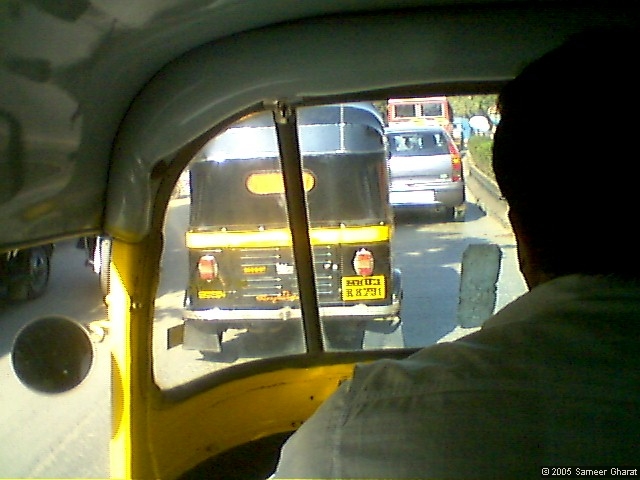
Though it’s been just slightly over six months since I left Mumbai, it does seem a lot. It’s not that I miss Mumbai much. I certainly don’t miss the chaos. It’s freezing cold in Toronto most of the time. But there’s order. I don’t have to sit in an autorickshaw for hours in the midst of rising automobile exhaust fumes just to reach home after work.
The subway in Toronto is crowded sometimes, but never as much as Mumbai’s suburban trains. And, commuting to Oakville in the Go Trains is such a pleasure. I guess, after a few years, when the novelty of it all dies down, all these activities will become a drag and full of drudgery. But till then, I’d rather be in Toronto than in Mumbai.
I received an e-mail message last week from Anju Makhija, a prominent Mumbai poet and writer. I don’t know here, but attended a scintillating session of discussion on Partition literature in which she was a participant. That was during the Kala Ghoda Art Festival in 2008.
The Kala Ghoda festival is on right now. Over the last few years it has developed into a major event in Mumbai. I miss being in Mumbai because instead of participating in the Kala Ghoda festival – as a spectator – I’m reading about it in on the Kala Ghoda Gazette – the festival’s official blog.
Last year, one of the highlights of the festival was the panel discussion on Partition Narratives. I attended the session primarily because Alok Bhalla (photograph) was to be one of the participants. He did not make it because of some delay. The session, even without him, turned out to be – as I said earlier -- scintillating. If you’re interested in reading my report on it, click here.
Alok Bhalla is an academic. He has published extensively on translation theory, literature, and politics. I haven’t read anything by him except his Stories about the Partition of India. Partition literature is so vast, diverse and multilingual that it becomes difficult for a lay reader to come to grips with the enormity of the subject. Also, it is impossible to get good translations of these works in English.
Bhalla’s one volume paperback has the best short stories from almost all major languages of South Asia in which most of the Partition Literature was (and is being) written: Bengali, Hindi, Punjabi, Urdu, and includes works of writers from Bangladesh, India and Pakistan. In fact, this book even has a short story originally written in Malayalam – a language not usually associated with Partition literature.
Bhalla’s book as the two best known classics of Partition literature: Sadat Hasan Manto’s Toba Tek Singh and Rajender Singh Bedi’s Lajwanti. If you want to read just one book on Partition literature, this is the one. Read it to understand the deep and permanent wounds inflicted by the Partition of the subcontinent. A brilliant and in depth review of the book is available at the following URL: http://www.urdustudies.com/pdf/10/27BhallaStories.pdf
An aside: I’m sure all Indians are aware of the Indian crabs’ story. I'm repeating it for those who haven't heard of it. It’s not necessary to close a basket carrying Indian crabs. This is because if one crab tries to get out of the basket, the other crabs will pull it down.
On the authority of recent experiences in Toronto, we can safely say this is true for the entire subcontinent.